
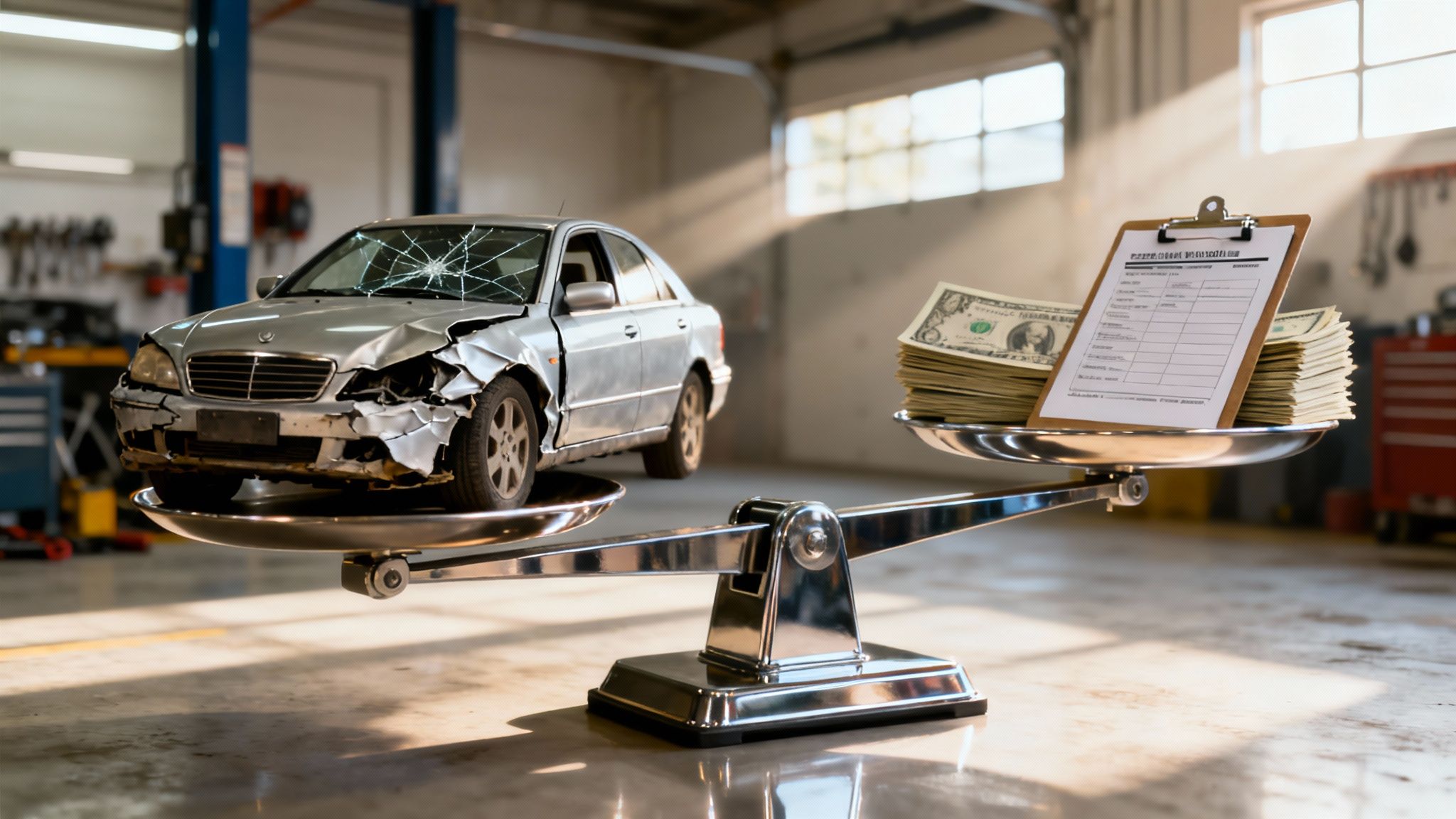
When your vehicle is declared a total loss in Oregon, the first thing your insurance company will do is send you a settlement offer. For many Portland drivers, that number often feels shockingly low—and there’s a reason for that.
Insurance companies follow valuation systems that tend to favor their bottom line, not yours. Understanding how insurers calculate total loss value in Oregon is the first step toward identifying mistakes, disputing them, and ensuring you receive the fair compensation you deserve.
In this guide, we break down the full process, explain the most common errors insurers make, and show you how Portland drivers can protect themselves using Oregon’s unique total loss regulations.
What Is a Total Loss in Oregon?
In Oregon, a vehicle is considered a total loss when:
-
The estimated cost of repairs approaches or exceeds the car’s actual cash value (ACV), OR
-
The insurer determines the vehicle is unsafe to repair
Most insurance companies treat a vehicle as totaled when repair costs reach about 70%–80% of its ACV, though each insurer’s formula varies.
Once your car is declared totaled, the insurer must calculate its actual cash value, which is supposed to represent the fair market value of your car right before the loss.
This is where issues often begin.
How Insurance Companies Calculate Total Loss Value in Oregon
Insurance carriers typically rely on third-party valuation companies to determine your vehicle’s value. These are not dealerships, not appraisers, and not experts in Oregon’s local market.
The most commonly used valuation systems include:
-
CCC One (CCC Intelligent Solutions)
-
Mitchell
-
Audatex
These companies generate what insurers refer to as the ACV report.
This report includes:
-
A list of “comparable vehicles”
-
Adjustments for mileage, trim, condition, and features
-
Final recommended market value
While the process sounds fair on paper, here’s where reality gets messy.
Step-by-Step Breakdown of How Insurers Value Your Vehicle
1. Identifying Comparable Vehicles
Insurers search for recently sold or listed vehicles that are “similar” to yours.
But in practice:
-
They often use listings far outside Portland
-
They pull vehicles with different trims or equipment
-
They include cars with accident histories, high mileage, or poor condition
This alone can significantly undervalue your vehicle.
2. Applying Adjustments (This Is Where Most Errors Happen)
Once insurers select their comparables, they apply adjustments for differences between your vehicle and the comparables, such as:
-
Mileage
-
Condition
-
Trim and packages
-
Optional equipment
-
Dealer vs private-party pricing
Many of these adjustments are automated by software—meaning they may not accurately reflect real-world Oregon market conditions.
3. Setting the “Base Value”
Insurers take the adjusted comparable vehicles and average them to create a base value.
This value becomes the foundation of your settlement offer, even if it’s unfairly low.
4. Subtracting Deductibles or Salvage Retention
If you choose to keep your vehicle after a total loss, insurers may deduct the salvage value, which is often calculated using unclear formulas that vary widely.
5. Presenting the Final Offer
You’ll receive your insurer’s valuation report, often presented as a polished, authoritative document.
But here’s the truth:
Many of these reports contain errors that can drastically reduce your payout—sometimes by thousands of dollars.
Where Insurance Companies Often Get It Wrong
Insurance valuations are notorious for inaccuracies, especially in local markets like Portland. Here are the most common mistakes:
1. Using Comparables That Aren’t Truly Comparable
This is the biggest issue Oregon drivers face.
Insurance companies frequently use:
-
Vehicles from cheaper rural markets
-
Cars with different trim levels
-
Listings that aren’t even the same model year
-
Vehicles in poor condition
-
Cars with branded titles (salvage, rebuilt, etc.)
Any one of these mistakes can lower your ACV significantly.
Example:
A 2017 Subaru Outback Limited in Portland should not be compared to a base model from Eastern Oregon. But this happens every day.
2. Incorrect Mileage Adjustments
Mileage adjustments are often overly aggressive or based on national averages that don’t reflect Portland’s market.
If your car has slightly above-average mileage, insurers may apply disproportionate deductions.
3. Missing Optional Equipment or Packages
Insurance companies routinely overlook:
-
Premium packages
-
Safety features
-
Technology upgrades
-
AWD systems
-
Towing packages
-
Luxury trim options
-
Custom wheels or manufacturer accessories
These features can drastically increase your vehicle’s value in Oregon’s competitive market.
4. Wrong Condition Ratings
Most Portland drivers take excellent care of their vehicles—but insurers assume “average condition” unless you prove otherwise.
This often leads to:
-
Unfair deductions
-
Understated condition adjustments
-
Incorrect wear-and-tear assumptions
5. Outdated or Irrelevant Market Data
Many valuations rely on:
-
Old listings
-
Expired sales
-
Data from months ago
-
Vehicles located hours away from Portland
But Portland’s auto market changes fast, especially for SUVs, hybrids, EVs, and popular commuter cars.
Incorrect market data = artificially low settlement offers.
6. Private-Party Listings Used as Comparables
Some insurers improperly use private listings instead of dealer listings.
Why this matters:
Dealership retail values are significantly higher than private-party prices.
Oregon law requires insurers to base valuations on fair market value, not the cheapest listings online.
How These Errors Cost Portland Drivers Money
When insurers undervalue your vehicle:
-
Your payout is lower
-
Your ability to replace your car is reduced
-
You may be forced into additional debt
-
You lose the financial stability you had before the accident
Many Portland drivers unknowingly accept low offers, believing the insurer’s valuation is final.
It is not.
Oregon law provides strong protections—if you know how to use them.
Your Rights Under Oregon’s Total Loss Laws
Oregon requires insurance companies to provide:
-
A clear valuation report
-
All comparable vehicles used
-
Adjustments and reasoning
-
Proof their valuation reflects the local market
If you believe the insurer undervalued your vehicle, you have the right to:
-
Request corrections
-
Challenge the valuation
-
Provide your own comparables
-
Hire a certified total loss appraiser
-
Activate the appraisal clause (if available in your policy)
This is where a professional appraisal can make the biggest difference.
How a Certified Total Loss Appraiser Helps You Fight a Low Offer
Working with a licensed Oregon total loss appraiser gives you a professionally documented, data-backed valuation that can be used to dispute unfair offers.
A certified appraiser will:
-
Review the insurer’s valuation for errors
-
Provide accurate Portland market comparables
-
Document mileage, upgrades, and vehicle condition
-
Create a defensible third-party report
-
Negotiate with the insurer under the appraisal clause
Most Portland drivers who hire an appraiser recover hundreds to thousands more in their settlement.
When to Hire a Total Loss Appraiser in Oregon
You should consider hiring an appraiser if:
-
Your gut tells you the offer is too low
-
Your vehicle had upgrades or premium features
-
Comparables in the insurer’s report look inaccurate
-
The offer won’t cover a similar replacement vehicle
-
The insurer refuses to adjust their valuation
If any of these apply, an independent appraisal is likely your best option.
Final Thoughts
Insurance companies are required to pay the fair market value for your totaled vehicle—but their valuation methods often fall short, especially in Portland’s unique auto market.
Understanding how insurers calculate ACV, recognizing common errors, and knowing your rights can help you protect your financial recovery after a total loss.
If your total loss offer seems low, don’t settle.
A certified Oregon total loss appraiser can help ensure your valuation is accurate, fair, and based on real Portland market data—not automated software.